Sleep difficulties affect a substantial portion of American adults. According to the 2024 NCHS Data Brief quantifying sleep difficulties, 15.4% of adults experience trouble falling asleep most days or every day, while only 54.8% wake up feeling well-rested regularly. This widespread pattern has driven increased interest in natural sleep interventions as alternatives to pharmaceutical options.The question of effectiveness, however, requires parsing clinical evidence rather than relying on popularity or marketing claims. Natural sleep aids span a wide range of compounds—from amino acids and minerals to herbal extracts and hormones—each targeting different aspects of sleep physiology. Research demonstrates that matching the right compound to your specific sleep disruption pattern matters more than simply selecting the most talked-about option.
This information is for educational purposes only and does not constitute medical advice. Natural sleep aids may interact with medications or underlying health conditions. Consult your physician or a board-certified sleep medicine specialist before using supplements, especially if you have chronic insomnia, take prescription medications, are pregnant, or have cardiovascular, psychiatric, or neurological conditions.
Your evidence-based sleep aid selection framework
- Match natural sleep aids to your specific disruption type (onset vs maintenance vs circadian)
- Melatonin and magnesium have strongest clinical evidence for effectiveness
- Timing and consistency matter more than dosage alone for most compounds
- Third-party testing (USP, NSF, ConsumerLab) verifies quality and purity
- Realistic timeline: 3-14 days for initial effects, 2-4 weeks for full benefits
What sleep disruption science reveals about natural interventions
Natural sleep aids typically work by supporting existing physiological sleep mechanisms—such as circadian rhythm regulation, neurotransmitter balance, or muscle relaxation—rather than forcing sedation through central nervous system depression like many pharmaceuticals. This fundamental difference means effectiveness depends heavily on matching the compound to the underlying cause of sleep disruption.
Sleep regulation involves multiple interacting systems. The circadian rhythm, controlled by the suprachiasmatic nucleus in the brain, governs the 24-hour sleep-wake cycle through light-sensitive melatonin secretion from the pineal gland. Sleep pressure builds throughout the day via adenosine accumulation, while neurotransmitters like GABA (gamma-aminobutyric acid) facilitate the transition from wakefulness to sleep by reducing neuronal excitability. Natural sleep aids demonstrate effectiveness when they address specific weaknesses in these systems—whether insufficient melatonin signaling, suboptimal GABA receptor function, or excessive physiological arousal preventing sleep onset.
Pharmaceutical sleep medications often work within 30 minutes by forcing sedation, but may disrupt normal sleep architecture and carry dependency risks. Natural compounds typically require consistent use over several days to weeks, optimizing existing regulatory pathways rather than replacing them. Sleep medicine specialists generally recommend natural aids for mild to moderate sleep difficulties, reserving pharmaceutical interventions for cases where underlying disorders require more aggressive treatment.

Matching solutions to your specific sleep pattern disruption
- If you struggle with falling asleep:
Magnesium (200-400mg) combined with L-theanine (100-200mg) taken 90 minutes before bed
- If you wake frequently during the night:
Glycine (3g before bed) or tart cherry extract
- If you have a shifted sleep schedule:
Melatonin (0.5-3mg) 30-60 minutes before target sleep time
- If you experience stress-related poor sleep:
Combination of magnesium, L-theanine, and low-dose melatonin
Consider a practical example: A 38-year-old professional experiencing frequent nighttime waking between 2-4 AM identified a sleep maintenance issue through sleep journaling. She implemented glycine 3g taken 30 minutes before bed combined with consistent sleep-wake timing. Within 5 days, nighttime waking episodes decreased from 4-5 per night to 1-2, and by week 3, sleep consolidation improved with only occasional brief awakenings.
Sleep onset difficulty: Racing thoughts and delayed sleep
The most commonly documented issue involves prolonged sleep onset latency—the time required to fall asleep after getting into bed. Normal sleep latency ranges from 10 to 20 minutes; anything consistently exceeding 30 minutes suggests a problem. This pattern often correlates with cognitive arousal, physical tension, or stress-activated sympathetic nervous system dominance.
Attention: The most frequent mistake is purchasing sleep aids based on popularity rather than sleep problem type. Identify whether you struggle with falling asleep, staying asleep, or circadian timing before selecting an intervention.
Magnesium demonstrates particular effectiveness for sleep onset difficulty through multiple mechanisms. It modulates GABA receptors (the primary inhibitory neurotransmitter system in the brain), promotes muscle relaxation by regulating calcium-magnesium balance in muscle cells, and helps manage the stress response through effects on the hypothalamic-pituitary-adrenal axis. Clinical protocols frequently recommend magnesium supplementation for individuals experiencing sleep onset difficulty related to neuromuscular tension and stress. Products like MAG 2 sleep – COOPER combine magnesium with complementary compounds to address multiple pathways involved in sleep initiation.
The clinical evidence for magnesium shows promise but also complexity. As the NCCIH synthesis on complementary sleep approaches notes, a 2021 review of 3 studies with 151 participants suggested magnesium may help sleep-onset latency in older adults with insomnia, though study quality was rated low and a larger 2022 review of 9 studies showed conflicting findings—highlighting the importance of individual trial and realistic expectations.
L-theanine, an amino acid found naturally in tea leaves, complements magnesium by reducing physiological markers of stress and promoting alpha brain wave activity. Research indicates dosages of 100-200mg taken 30-90 minutes before bed can reduce the time required to fall asleep, particularly when anxiety or rumination drives sleep onset difficulty.
Sleep maintenance problems: Frequent nighttime waking
Sleep maintenance insomnia—characterized by waking multiple times during the night or prolonged middle-of-the-night wakefulness—requires different interventions than sleep onset difficulty. This pattern often relates to insufficient sleep consolidation.
Glycine shows promising evidence for sleep maintenance through reducing core body temperature. Clinical trials using 3g before bed have demonstrated improvements in sleep quality and reductions in nighttime waking. Tart cherry extract provides naturally-occurring melatonin along with anti-inflammatory polyphenols, showing potential benefits for sleep duration and maintenance.
Circadian rhythm misalignment: Shifted sleep schedule
Circadian rhythm disorders—including delayed sleep phase, advanced sleep phase, or jet lag—require timing-based interventions rather than compounds that simply promote relaxation.
Melatonin stands as the most evidence-supported option for circadian issues when used correctly. Taken 30-60 minutes before the desired sleep time at a consistent hour each night, low doses (0.5-3mg) can gradually shift circadian timing over one to two weeks. Research demonstrates strongest effectiveness for jet lag and delayed sleep phase syndrome. The timing window matters critically—taking melatonin at inconsistent times can interfere with natural melatonin secretion patterns. Sleep medicine specialists generally recommend starting with the lowest effective dose (0.5-1mg) rather than the 5-10mg doses commonly marketed.
The effectiveness hierarchy: what clinical evidence actually demonstrates
Evaluating natural sleep aids requires distinguishing between theoretical mechanisms, preliminary research, and robust clinical evidence. The strength of evidence varies dramatically across compounds—from well-established interventions backed by multiple systematic reviews and meta-analyses to emerging options with promising but limited data. Understanding clinical trial methodology for evaluating supplements helps contextualize what « effective » actually means in sleep research, where effect sizes are often modest and individual variation high.
The clinical research hierarchy places systematic reviews and meta-analyses of randomized controlled trials at the top, followed by individual RCTs, then observational studies and case reports. For natural sleep aids, even the strongest evidence rarely reaches the level seen with pharmaceutical interventions—partly because funding for natural compound research is limited compared to patentable drugs, and partly because natural aids work through gentler mechanisms with inherently smaller effect sizes.
| Compound | Evidence Strength | Primary Mechanism | Onset Timeline | Best For |
|---|---|---|---|---|
| Melatonin | Strong (multiple RCTs, meta-analyses) | Circadian rhythm regulation | 30-60 minutes | Jet lag, shift work, delayed sleep phase |
| Magnesium | Strong (systematic reviews support) | GABA receptor modulation, muscle relaxation | 1-2 hours, builds over days | Sleep onset difficulty, stress-related insomnia |
| L-theanine | Moderate (positive trials, smaller scale) | Reduces stress response, promotes alpha waves | 30-90 minutes | Anxiety-driven sleep difficulty |
| Valerian root | Moderate (mixed results, individual variation) | GABA modulation (hypothesized) | 2-4 weeks consistent use | General sleep quality (requires patience) |
| Glycine | Moderate (promising trials, needs replication) | Core body temperature reduction | Same night, stronger after several days | Sleep maintenance, nighttime waking |
Strong evidence tier: Melatonin and magnesium
Melatonin has been studied extensively in clinical trials, with particular strength of evidence for jet lag and circadian rhythm disorders. A 2021 review cited by NCCIH found that melatonin may help with jet lag based on analysis of 10 studies involving 994 participants. The evidence for chronic primary insomnia remains more mixed—melatonin shows a modest but consistent reduction in sleep onset latency, which some individuals find meaningful while others do not. The key insight: melatonin works primarily as a circadian signal rather than a sedative.
Magnesium benefits from systematic reviews supporting its role in sleep, though the evidence shows some inconsistency depending on population studied. Clinical protocols generally recommend 200-400mg taken 1-2 hours before bed, with effects building over 3-7 days. The form of magnesium influences both bioavailability and tolerability; chelated forms like magnesium glycinate demonstrate better absorption and fewer digestive side effects than magnesium oxide.
Moderate evidence tier: Valerian, L-theanine, glycine
Valerian root represents one of the most traditional herbal sleep aids, with mixed modern clinical evidence. Research shows considerable individual variation—some users report substantial benefits after 2-4 weeks of consistent use at 300-600mg, while others experience no effect. L-theanine has demonstrated stress-reducing and sleep-promoting effects in multiple smaller trials at dosages of 100-200mg, showing effects within 30-90 minutes. Glycine shows intriguing evidence for sleep maintenance through thermoregulatory effects, though research remains limited to a small number of studies requiring replication.
Emerging evidence: Tart cherry extract and CBD
Tart cherry extract provides naturally-occurring melatonin along with anti-inflammatory compounds, with preliminary positive findings requiring larger trials. CBD has gained substantial consumer attention, but clinical evidence lags far behind popularity, showing mixed results and poorly defined dosing protocols. Sleep medicine specialists generally recommend prioritizing compounds with stronger evidence before experimenting with CBD.
Important Considerations and Limitations: This information synthesizes current research but cannot replace personalized medical evaluation. Supplement effectiveness varies significantly between individuals based on underlying causes of sleep disruption. Quality and purity of supplements vary widely between manufacturers, and long-term safety data is limited for some natural sleep aids. Consult your physician or a board-certified sleep medicine specialist, especially if you have chronic insomnia, take prescription medications, or have underlying health conditions.
Implementation protocols: timing, combinations, and progression strategies
Translating evidence into effective practice requires attention to administration timing, combination strategies, and quality verification. Natural sleep aids demonstrate time-dependent effects; melatonin must occur 30-120 minutes before target sleep time, magnesium works best 1-2 hours before bed, while L-theanine and glycine show faster onset (30-90 minutes).
Combination approaches can address multiple pathways simultaneously. Clinical protocols commonly pair magnesium with L-theanine for stress-related sleep onset difficulty. Adding low-dose melatonin (0.5-1mg) may benefit individuals with both stress-related arousal and mild circadian misalignment. The principle: combine compounds with distinct mechanisms rather than stacking multiple options targeting the same pathway.
Realistic timeline expectations prevent premature abandonment. Fast-acting compounds like melatonin and L-theanine may show benefits the first night, though consistency over 3-7 days typically strengthens effects. Magnesium and glycine often demonstrate progressive improvement over the first week. Valerian root requires 2-4 weeks of consistent use. Sleep medicine specialists generally recommend maintaining a sleep diary to track objective changes.
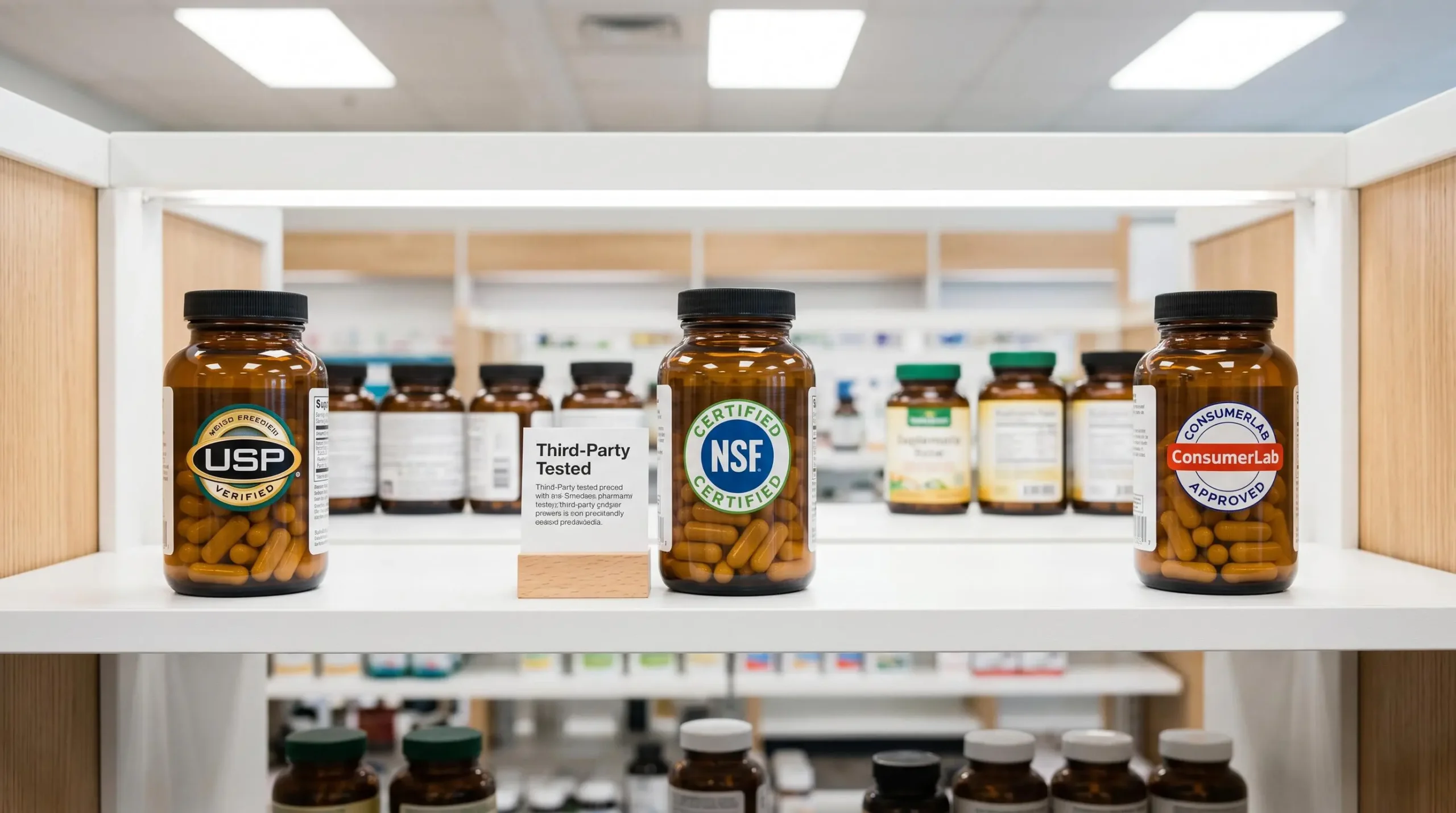
- Verify third-party testing certification (USP, NSF, or ConsumerLab seal)
- Check label for specific compound form (e.g., « magnesium glycinate » not just « magnesium »)
- Confirm dosage matches clinical research ranges for your target compound
- Look for GMP (Good Manufacturing Practices) certification on label
- Avoid proprietary blends that hide individual ingredient amounts
Quality control represents a critical concern given the regulatory framework governing dietary supplements. As outlined in FDA guidance on dietary supplements, under the Dietary Supplement Health and Education Act (DSHEA), manufacturers bear responsibility for ensuring safety and accurate labeling before marketing—the FDA does not provide pre-market approval for effectiveness. Third-party testing by organizations like USP, NSF, or ConsumerLab verifies that products contain the labeled ingredients at stated potency without contaminants. Similar quality verification standards apply across dietary supplement and natural product industries to ensure ingredient integrity.
Your questions about natural sleep aid safety and effectiveness
Can you become dependent on natural sleep aids?
Physical dependency risk is low for most natural sleep aids like magnesium, L-theanine, and glycine. Melatonin does not create physical dependency, but psychological reliance can develop with any sleep aid. Clinical guidance recommends periodic breaks and addressing underlying sleep hygiene issues rather than relying solely on supplements long-term.
How long does it take for natural sleep aids to work?
Timeline varies by compound: Melatonin and L-theanine work within 30-90 minutes. Magnesium and glycine show initial effects the same night but strengthen over 3-7 days. Valerian root requires 2-4 weeks of consistent use before benefits become apparent. Effectiveness also depends on matching the right compound to your specific sleep problem type.
Are natural sleep aids safe to combine with prescription medications?
Potential interactions exist, particularly with blood pressure medications, antidepressants, and sedatives. Melatonin can interact with blood thinners and immunosuppressants. Magnesium affects absorption of certain antibiotics. Always consult your physician or pharmacist before combining natural sleep aids with prescription medications, especially if you take multiple medications.
Which natural sleep aid works fastest?
Melatonin and L-theanine demonstrate fastest onset, typically within 30-60 minutes when taken on an empty stomach. However, « fastest » does not mean « most appropriate »—effectiveness depends on matching the compound to your sleep disruption type. Fast-acting options work best for circadian issues and acute stress, not chronic insomnia with complex causes.
Do natural sleep aids have side effects?
Side effects are generally mild but vary by compound. Melatonin can cause morning grogginess, vivid dreams, or headache. Magnesium may cause digestive upset (form-dependent—oxide more likely than glycinate). Valerian can cause headache or stomach discomfort in some users. L-theanine and glycine show minimal side effects in research. Start with lower doses to assess individual tolerance.